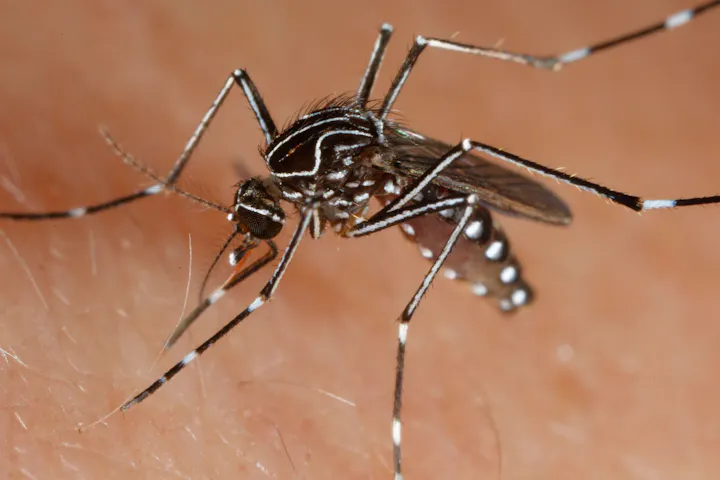
Invasive Aedes aegypti mosquitoes have been found in Carpinteria!
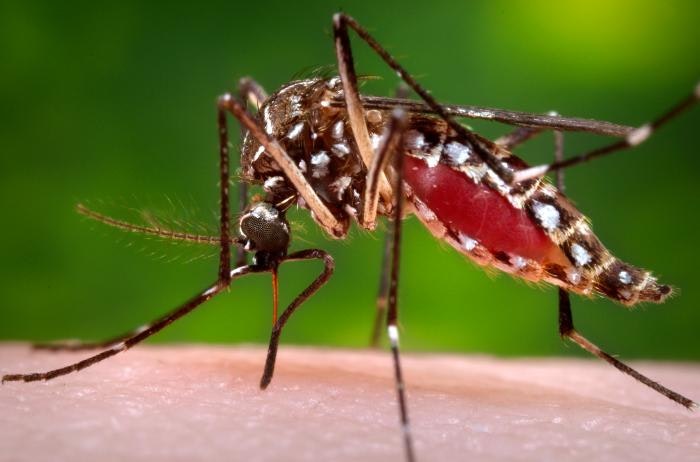
Non-native yellow fever mosquitoes, Aedes aegypti have been found in July in Carpinteria.
Non-native Australian backyard mosquitoes, Aedes notoscriptus, were found in Santa Barbara's West Side ad Mesa neighborhoods in March and June 2026, respectively.

Please contact the District at 805-969-5050 (or send us a message through our 'Contact Us' page) if you find yourself being bitten by aggressive mosquitoes during daytime hours. Both of these mosquitoes like to bite around the feet and ankles which is why residents being tormented by these pests call them "ankle biters". To learn more about the threats these species could bring and what you can do to prevent them from breeding around your house, please visit the links below.
Aedes aegypti brochureAedes aegypti brochure in SpanishInvasive Aedes press release from first find in 2020Invasive Aedes press release for Carpinteria findMore info can be found at these websites:
- California Department of Public Health Invasive Aedes
- Center for Disease Control website
Note: Among the places around the home where mosquitoes are found breeding, inspectors in other counties where invasive Aedes are found are finding them at residences with clogged yard drains. Please be sure to check your drains for clogs and, if they are, clear out the mud, leaves, silt and other debris so water can drain out. You can also add mosquito dunks - available at many hardware and home and garden stores - if there is standing water and you can't unclog the drain immediately.
Click on these links to see videos by fellow Mosquito Districts on how to screen your drains:
A Public Service Announcement on Aedes aegypti in Santa Barbara (produced by and in cooperation with the City of Santa Barbara):
Frequently Asked Questions (FAQs)
- How do you pronounce Aedes aegypti? It's pronounced "80s" (as in the 1980s) Egypt-eye
- What's the big deal? Why is this important? There are a couple of main reasons these finds are important: 1.) If these mosquitoes become widespread, they will have a huge negative impact on our quality of life here in Santa Barbara County. Imagine getting buzzed and bit by mosquitoes every time you go outside. And you may not be able to escape them by going inside since this mosquito can breed indoors. Also, imagine yourself being bothered and bit by mosquitoes while you're trying to go to sleep or waking up in the middle of the night with itchy bites; 2.) these mosquitoes have the potential to carry harmful viruses like Chikungunya, Zika, and Dengue. While the first two are not known to be in California, Dengue virus was found last year from mosquitoes collected in Los Angeles County.
- What is the risk of infection by these viruses?The risk from infection is zero if the mosquitoes that carry them are not around. The risk increases if the mosquitoes are present, though the risk still remains very low if Aedes aegypti is only found in a very small limited area and are present in very low numbers. Keep in mind that the California Dept. of Public Health keeps records of California residents who, while traveling, pick up these viruses when they get bit by infected mosquitoes. These are known as "travel associated" cases. Click on the following links to view the reports:
- Can you get malaria or West Nile virus from Aedes aegypti? No, this mosquito is not a host for WNV or the malaria parasite.
- Does Aedes aegypti bite pets and other animals? Yes, these mosquitoes will bite dogs, cats, and other humans, though they prefer to bite humans. Also, there is little to no evidence that pets can get sick from bites from infected Aedes aegypti.
- How did this mosquito get to Santa Barbara County? Aedes aegypti does not fly too far from human dwellings and, together with the fact that cities along coastal SB County are isolated by long stretches of undeveloped land, it is extremely unlikey they got here by natural spread. The only way they can get here is by being transported by humans, either as adult mosquitoes traveling in a vehicle as an uninvited hitchhiker, as larvae in a container with water (a vase with water in it, for example) or as eggs clinging to a dry container.
-
How can we get rid of these mosquitoes? There are several ways yellow fever mosquitoes are being targeted:
- The Mosquito & Vector Control District is setting out traps to figure out how widespread these mosquitoes are, and to some extent, provide some control (a single, female yellow fever mosquito can lay several hundred eggs in its lifetime, so even removing one mosquito can have some impact if the number of mosquitoes in the infested area is relatively low).
- District personnel are also going door-to-door around the site of the original find to conduct inspections, empty out containers that have water in them, educate residents, and apply dry, granular treatments to kill mosquito larvae, if necessary.
- Because residential areas are dense, highly populated, and some yards may have numerous breeeding sources, door-to-door inspections and treatments can be very labor intensive and take a very long time. Residents can help "Fight the Bite" by going around their yards and homes and emptying out anything containing standing water. Items like your pet's water dishes and bird baths should be emptied out periodically and can be refilled. Keep in mind that in very warm weather, yellow fever mosquitoes can develop from egg to adult in about 7 days.
- How long do mosquitoes live? In general, about 2 to 3 weeks.
- Are "bug zappers" and citronella good for mosquito control? These products generally are not highly effective for mosquito control. Bug zappers attract many other kinds of insects and are not as attractive to mosquitoes as humans. Citronella does not provide long-lasting protection and doesn't kill mosquitoes. Mosquitoes are highly attracted to the carbon dioxide and chemical compounds found in human sweat and oils. Effective mosquito repellents mask the odors from those compounds.
If you have other questions, please send them our way through our 'Contact Us' web page.